Zhaori
1 / 3
| Control mode | Time + GPS |
| Average tracking accuracy | 0.1° - 2.0° (adjustable) |
| Gear motor | 24V/1.5A |
| Output torque | 5000 N·M |
| Tracking power consumption | < 0.02kwh/day |
| Azimuth angle tracking range | ± 45° |
| Elevation angle tracking range | 45° |
| Max. wind resistance in horizontal | > 40 m/s |
| Max. wind resistance in operation | > 24 m/s |
| Material | Hot-dipped galvanized > 65μm |
| System guarantee | 3 years |
| Working temperature | -40℃ — +75℃ |
| Technical standard & certificate | CE, TUV |
| Weight per set | 150 KGS - 240 KGS |
| Total power per set | 1.5kW - 5.0kW |
Produces 30% to 40% more energy yield than fixed-tilt solar systems.
Automatic tracking based on longitude, latitude, and local time.
Simple structure with no back shadows, ideal for bi-facial solar panels.
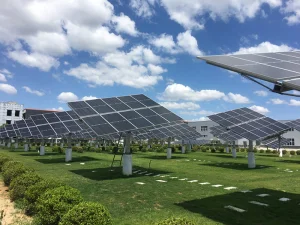
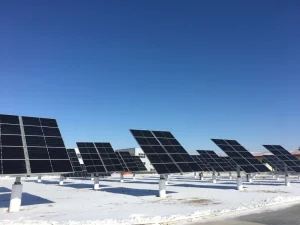
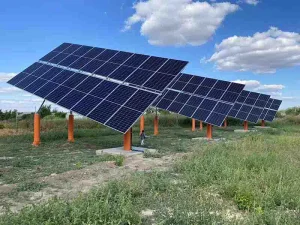
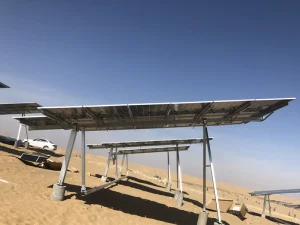
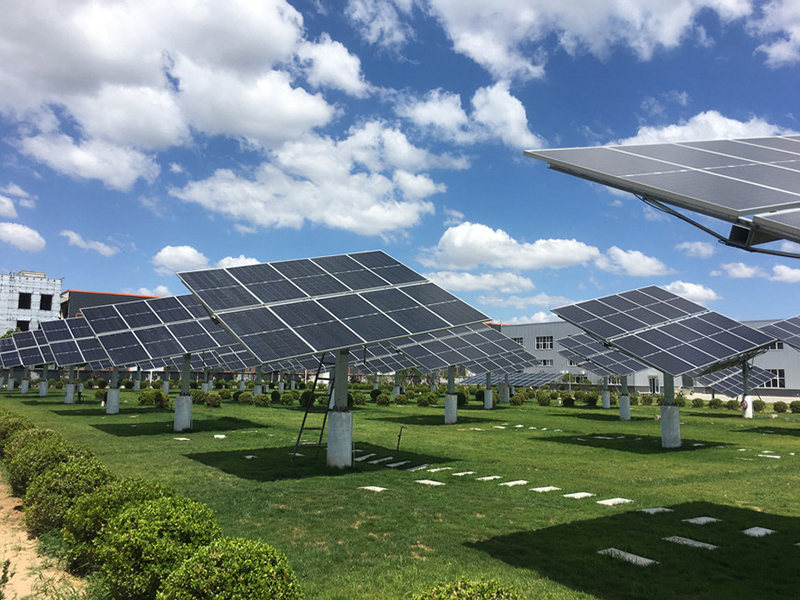
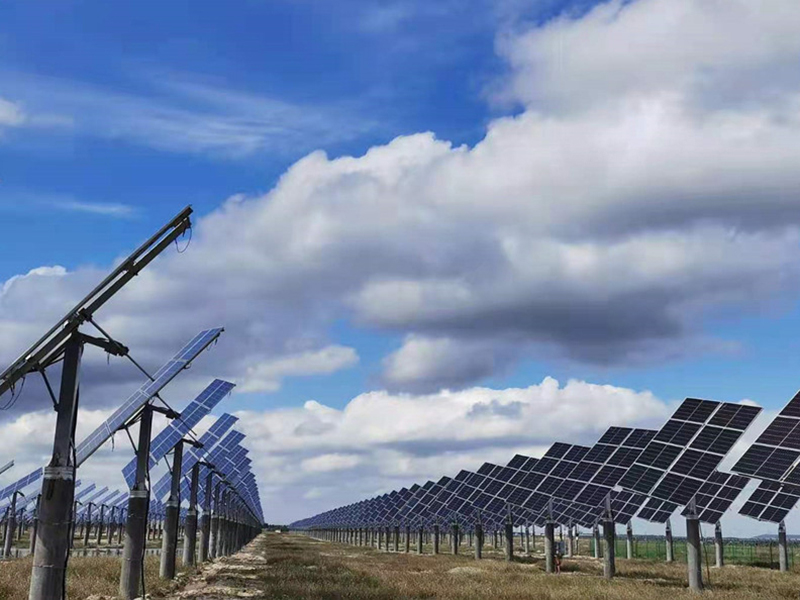
Since the Earth’s rotation relative to the sun is not the same all year, with an arc that will vary by season, a dual axis tracking system will consistently experience greater energy yield than its single axis counterpart since it can follow that path directly. The dual axis solar tracking system has two automatic axis tracking the azimuth angle and elevation angle of the sun automatically every day. It has very simple structure, with a reduced number of parts and screw connections, no back shadows for bi-facial solar panels, very easy for installation and maintenance.
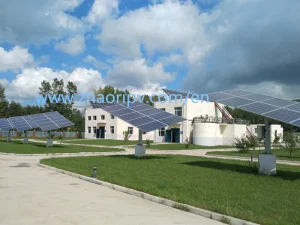
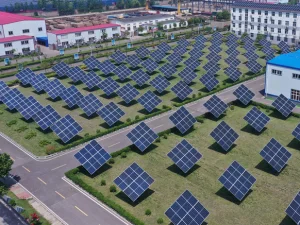
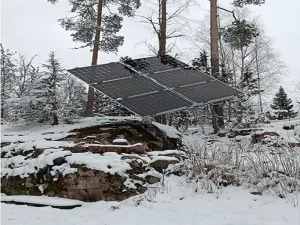
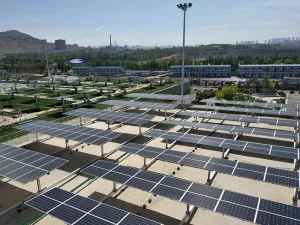
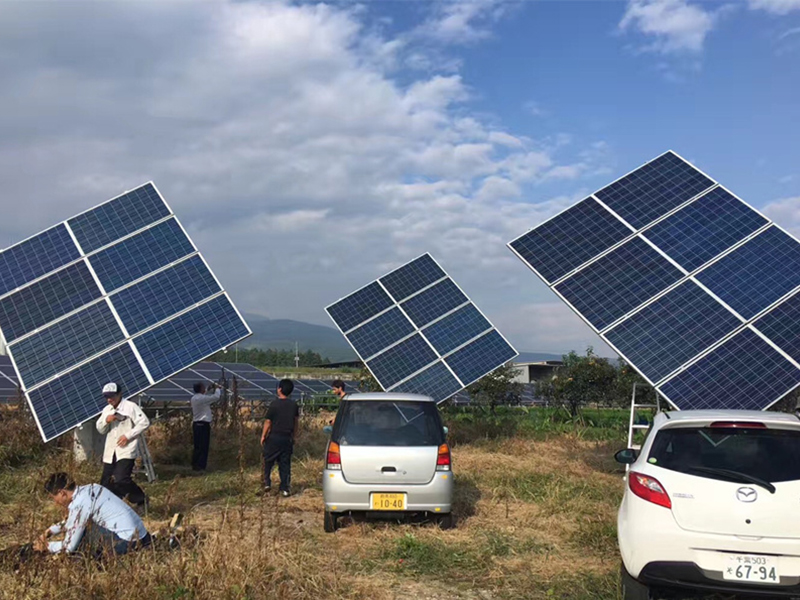
Each set mounting 6 - 12 pieces of solar panels (about 10 - 26 square meters solar panels). The control system can control the driving system track the sun according to the longitude, latitude and local time data downloaded by GPS device, keeps solar panels at best angle for receiving sunlight, so that it can makes full use of sunlight. This reduces LCOE and brings more revenue for investors. It is an independent support structure, with best terrain adaptability, widely used in mountain projects, solar parks, and green belt projects.
All the driving and control units are developed by a dedicated technical team, specially designed for solar tracking systems. The driving system utilizes brushless D/C motors which provide a very long service life.