In the rapidly evolving landscape of global renewable energy, the choice between Single Axis Solar Trackers and Fixed Tilt Mounting Systems represents one of the most critical decisions for project developers and EPC contractors. This choice directly dictates the Levelized Cost of Energy (LCOE), the Internal Rate of Return (IRR), and the long-term bankability of utility-scale solar installations.
Shandong Zhaori New Energy Tech. Co., Ltd., a pioneer with over a decade of intellectual property in solar kinematics, presents this technical analysis. While fixed-tilt systems offer lower initial CAPEX, modern single-axis trackers—exemplified by our ZRP and ZRT series—provide an energy yield increase of 15% to 30%, effectively neutralizing the upfront cost differential within the first few years of operation.
Our "More Simple, More Reliable, More Effective" philosophy eliminates over-engineered components that lead to field failures. By utilizing CNC machine tools and automatic welding robots, we ensure every tracker meets the highest structural integrity standards.
Zhaori's proprietary AI-driven backtracking technology prevents row-to-row shading during early morning and late afternoon hours, ensuring that even in dense layouts, the energy harvest is maximized.
Our 2P and 1P configurations are specifically designed to minimize rear-side shading, allowing bifacial modules to capture up to 10% additional "albedo" gain from reflected sunlight.
A "one-size-fits-all" approach is the enemy of solar efficiency. We analyze environmental variables to provide tailored solutions:
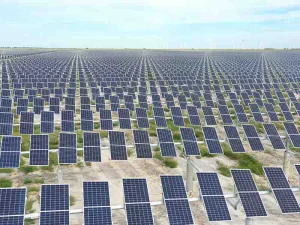
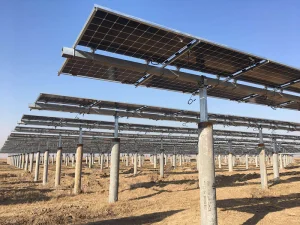
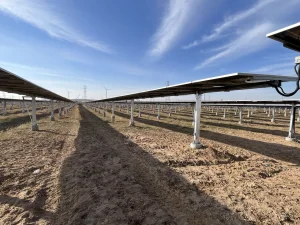
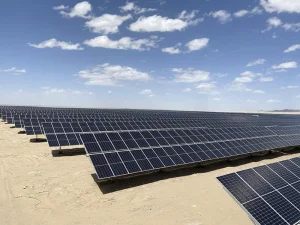
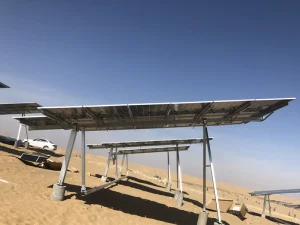
In arid environments like the Middle East or North China, our trackers feature IP66-rated protection and automated stow modes for sandstorms. The 360MW desert project demonstrates our ability to maintain precision tracking in harsh, abrasive conditions.
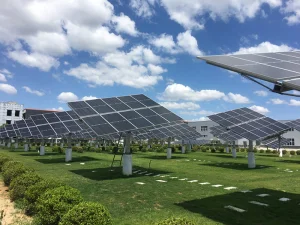
For regions with complex topography, our Tilted Single Axis (ZRT) and Dual Axis (ZRD) systems provide the flexibility needed to install on slopes without extensive land leveling, saving significant civil engineering costs.
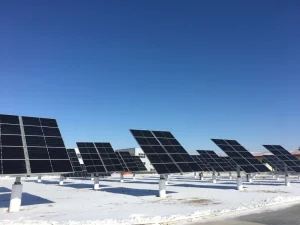
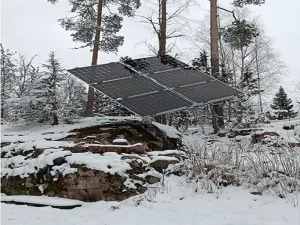
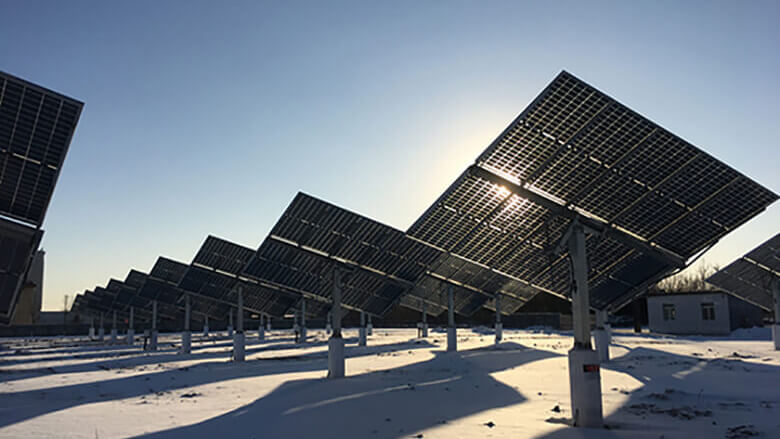
Our "Snow Mode" allows modules to tilt to an extreme angle, facilitating natural snow shedding and preventing structural overload. Our systems have been proven in projects across Northern China after heavy snowfall.
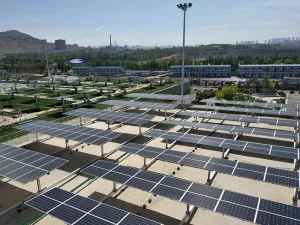
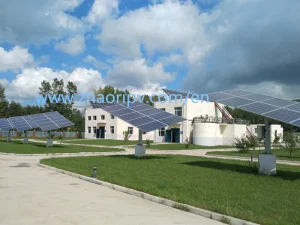
While most trackers are ground-mounted, Zhaori offers lightweight variations for large-scale industrial rooftops, allowing factories to achieve higher self-consumption rates compared to fixed-tilt rooftop arrays.
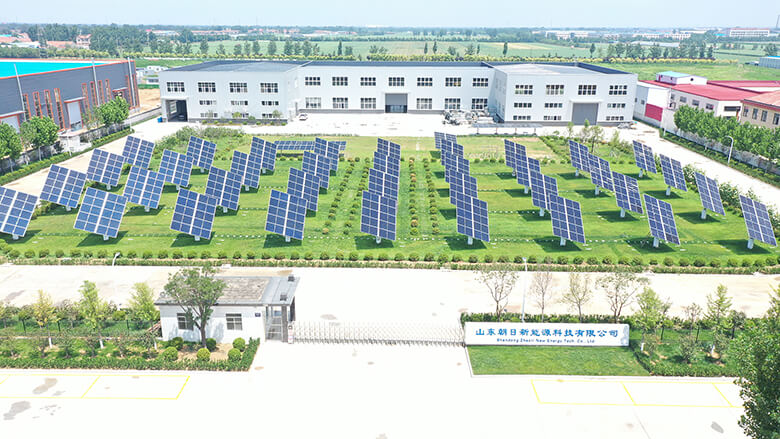
Operating out of a 50,000 square meter facility, Shandong Zhaori New Energy integrates the entire manufacturing lifecycle. From raw material screening to hot-dip galvanizing and final inspection, our "Level-by-Level" control system ensures zero-defect delivery.
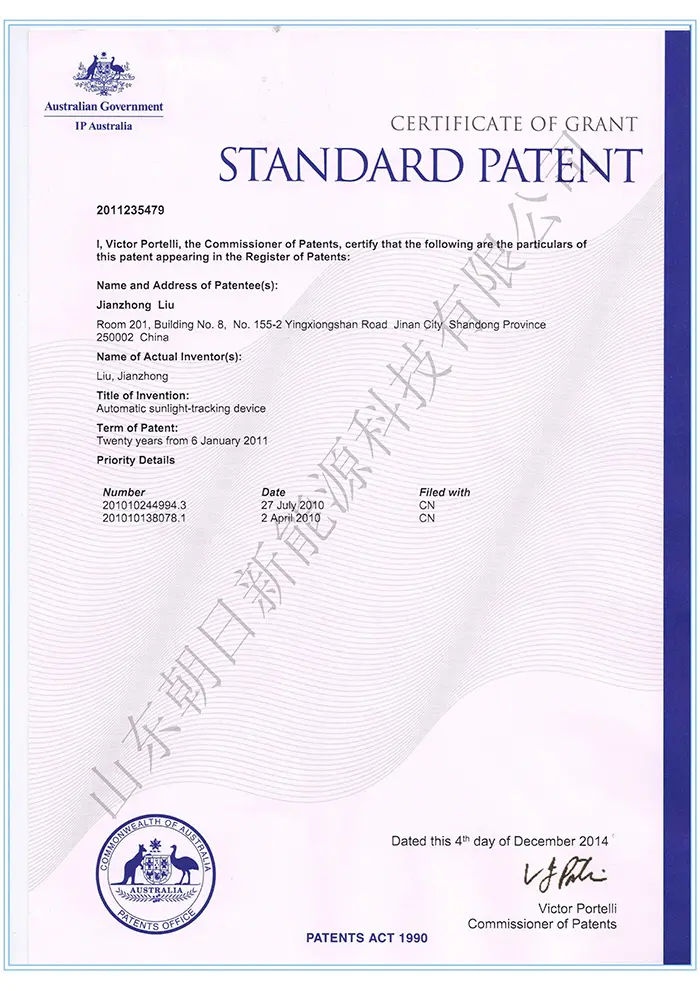
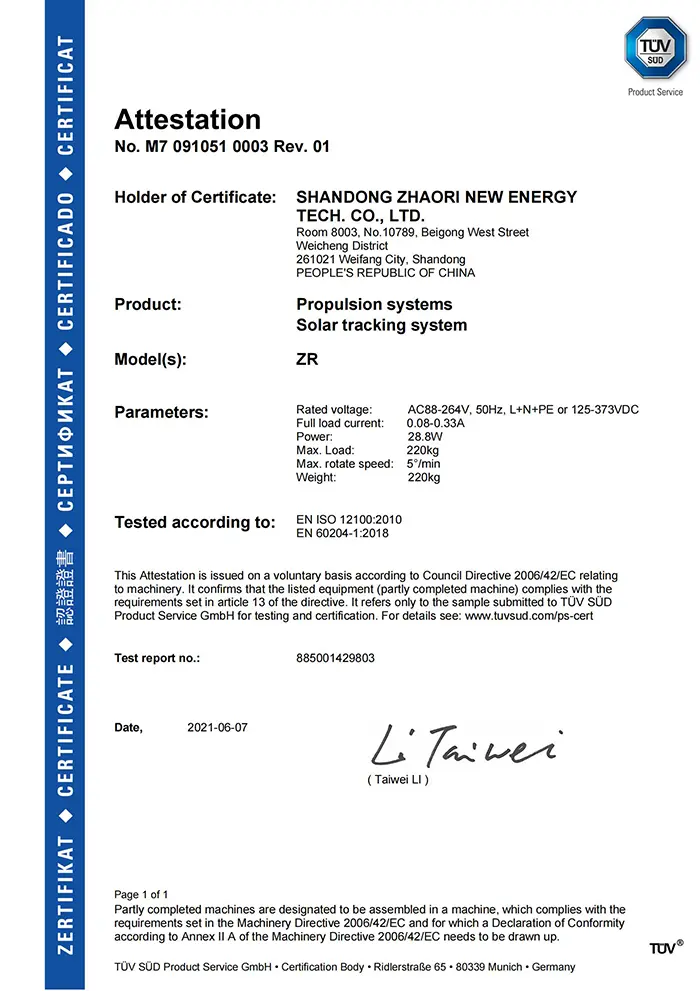
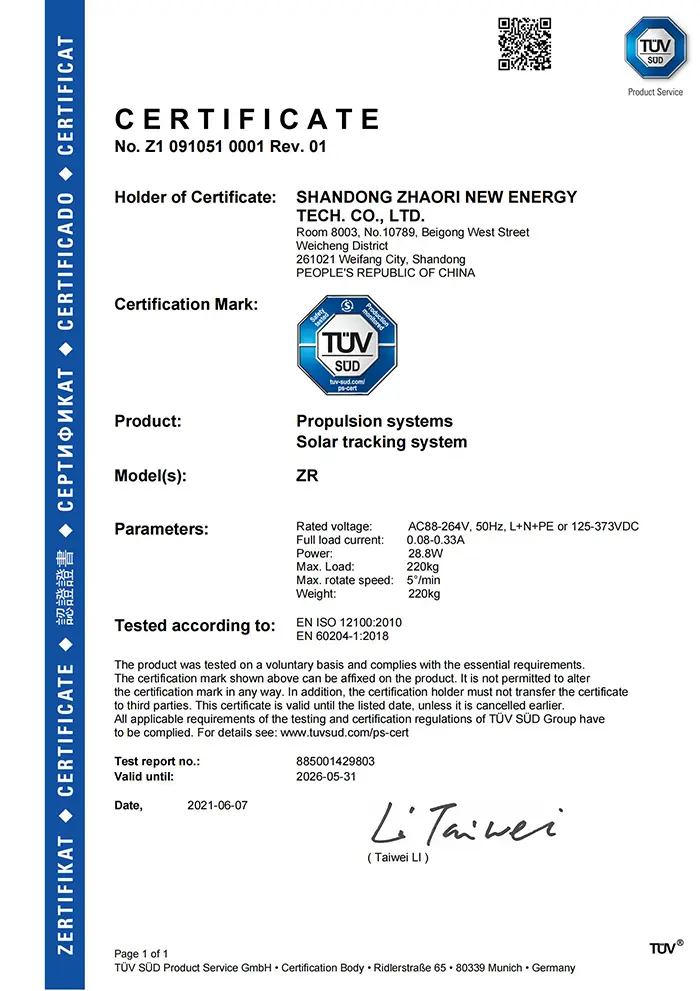
Our expertise is backed by international validation. We don't just claim quality; we prove it through rigorous testing and global legal recognition.
TUV Certified - Ensuring international safety standards.
CE Compliance - Ready for the European Market.
ISO 9001 - Quality Management Excellence.
Intellectual Property: We hold invention patents in the United States, European Union, Japan, South Korea, Canada, Australia, India, Brazil, and South Africa. This global patent portfolio protects our clients' investments and ensures that our technology is unique and legally sound across all major markets.
The next generation of solar tracking is not just about moving steel; it's about processing data. Zhaori is currently developing integrated Smart O&M (Operation and Maintenance) platforms that utilize IoT sensors to predict component wear before failure occurs.
Our upcoming controller updates will include diffuse radiation tracking, which optimizes the module angle on cloudy days to capture the maximum light from the entire sky dome, not just the direct solar beam.
Integrating with battery storage systems, our trackers will be able to adjust angles based on real-time grid pricing, maximizing energy production when it is most valuable.
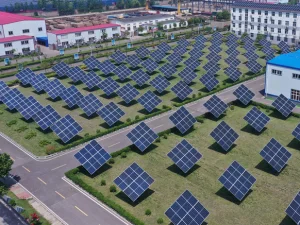
353MW Utility-Scale Flat Single Axis Project
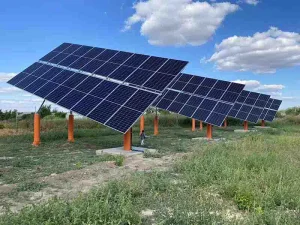
The Beauty of Precision: Dual Axis Showcase
 Zhaori