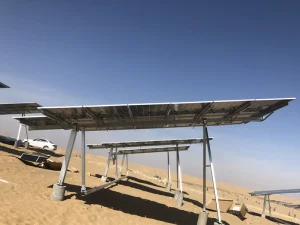
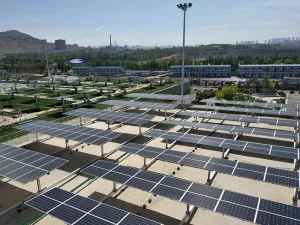
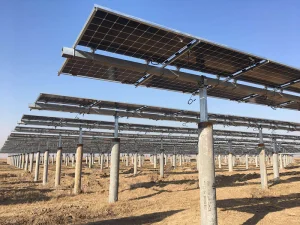
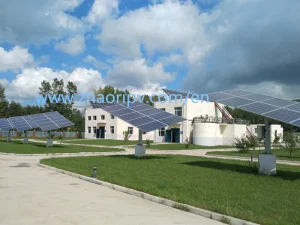
In the rapidly evolving landscape of photovoltaic (PV) technology, the decision to buy 1P vs 2P solar trackers is no longer just a structural choice—it is a financial strategy. As global energy markets transition towards ultra-large bifacial modules (600W+), the mechanical architecture of tracking systems has become the primary determinant of a project's Levelized Cost of Energy (LCOE).
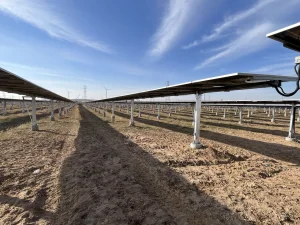
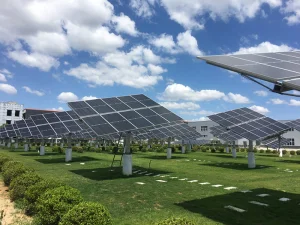
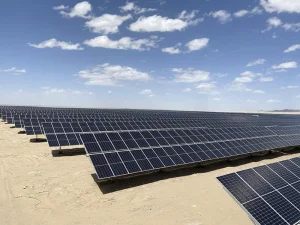
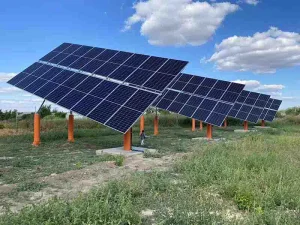
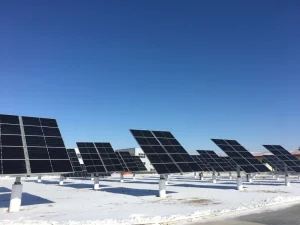
1P (One-in-Portrait) trackers feature modules mounted in a single vertical row, offering unparalleled stability in high-wind zones. Conversely, 2P (Two-in-Portrait) systems utilize two rows of modules, significantly reducing the number of piles required and potentially lowering civil engineering costs. At Shandong Zhaori New Energy Tech. Co., Ltd., we provide both configurations, engineered with proprietary AI-driven algorithms to maximize yield while ensuring structural integrity.
| Feature | 1P Single Axis Tracker | 2P Single Axis Tracker |
|---|---|---|
| Structural Height | Lower profile, better aeroelastic stability. | Higher profile, requires advanced damping. |
| Foundation Density | More piles per MW (Approx. 300-400). | Fewer piles (Approx. 150-200), lower civil cost. |
| Bifacial Compatibility | Minimal shading from torque tube. | Optimized for large format bifacial modules. |
| Terrain Adaptability | Excellent for North-South slopes. | Better for uneven ground with fewer foundations. |
| Wind Resistance | Superior performance in hurricane regions. | Requires complex wind tunnel testing. |
Compliance with UL 2703 and UL 3703 standards is mandatory. Our 1P systems are favored in the "Wind Belt" states due to their robust torsional stiffness.
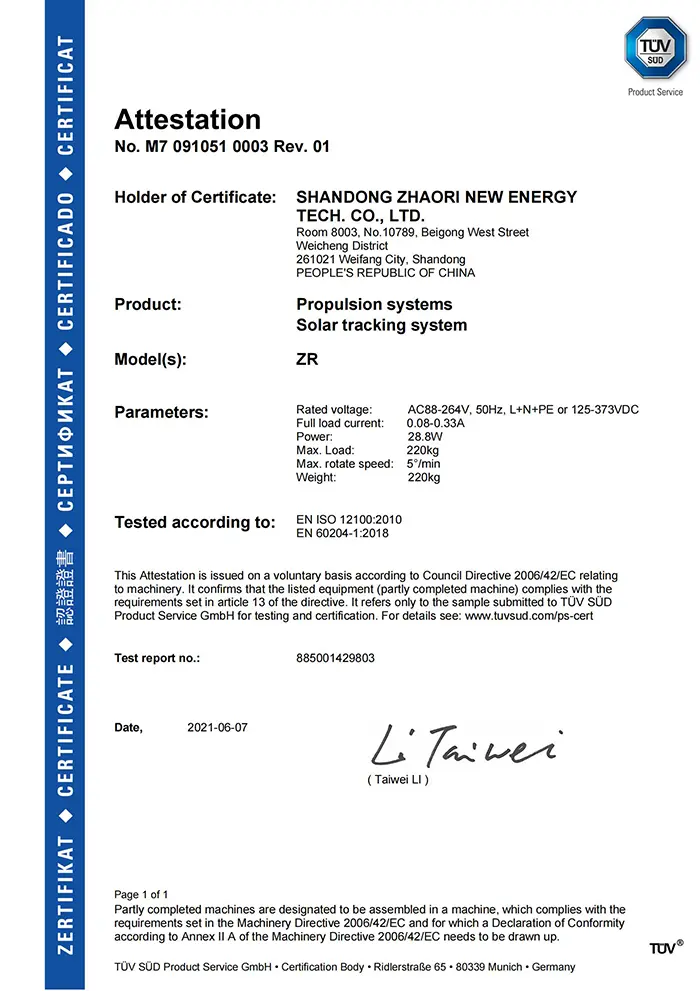
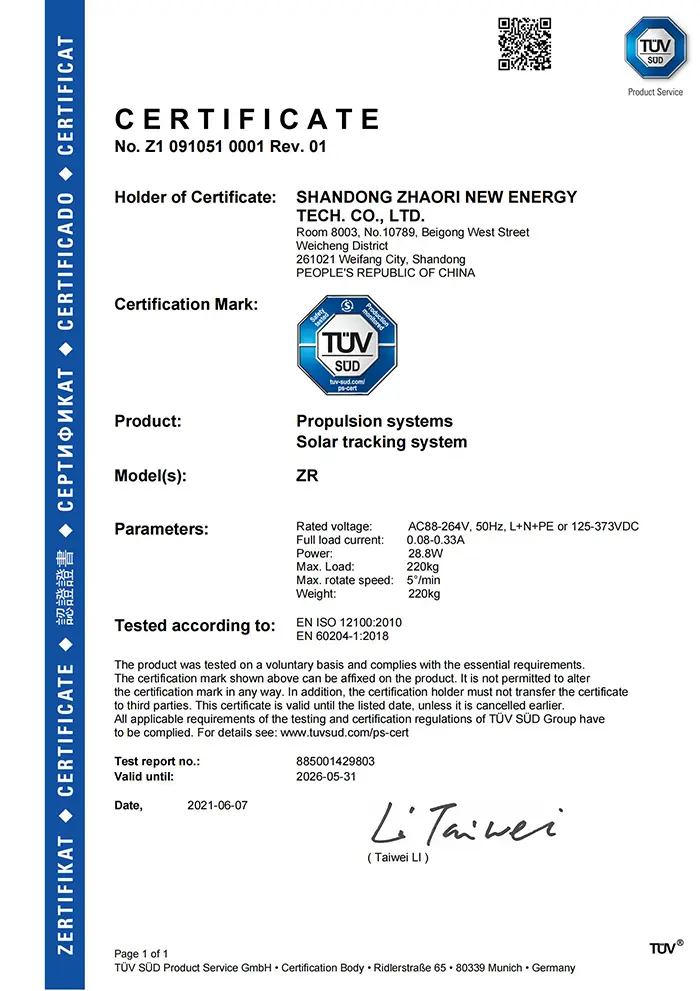
Focus on TUV Rheinland certification and CE marking. In desert regions like Oman or UAE, 2P systems are preferred to minimize ground disturbance.
Addressing high-corrosion environments with C5-rated galvanization. Our systems meet AS/NZS 1170.2 standards for cyclonic wind loads.
As a leading China solar tracker supplier, Shandong Zhaori New Energy leverages the world's most sophisticated steel and electronics ecosystem. Our 50,000 square meter factory integrates:
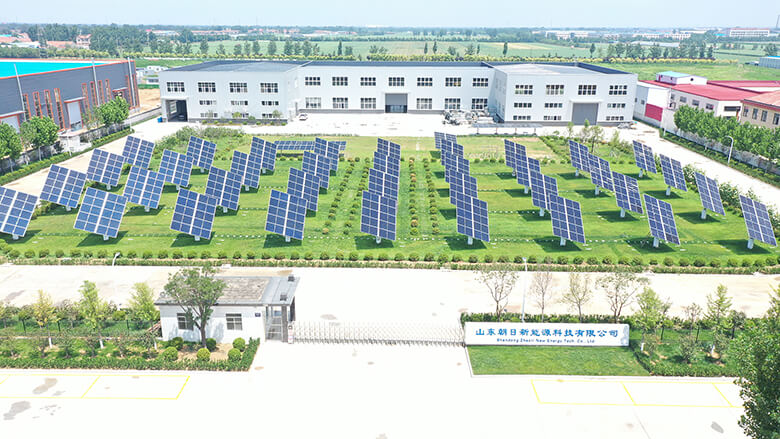
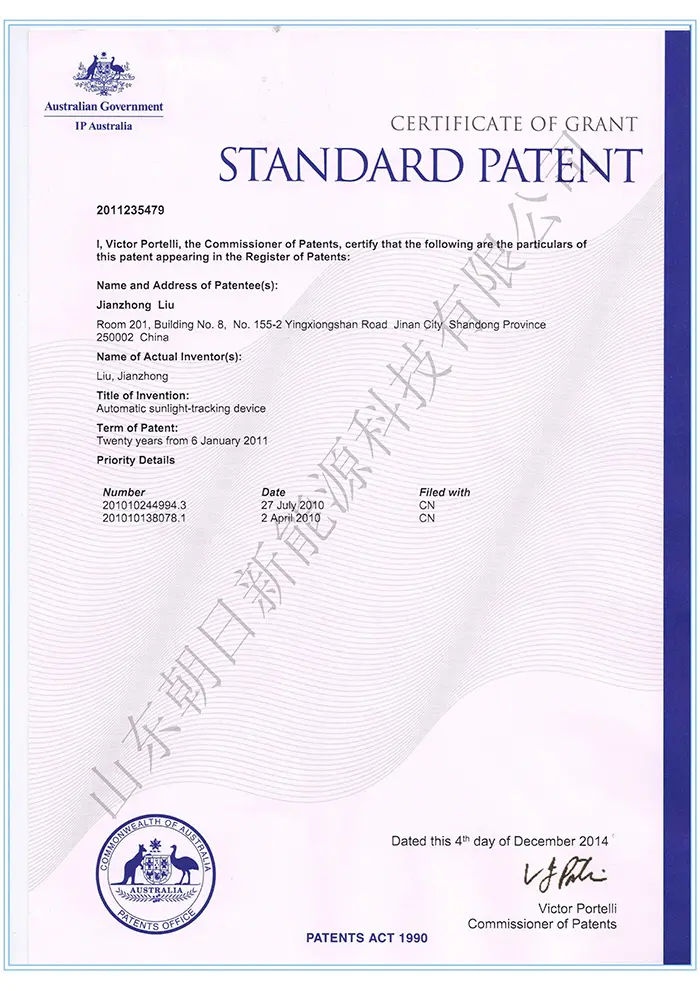
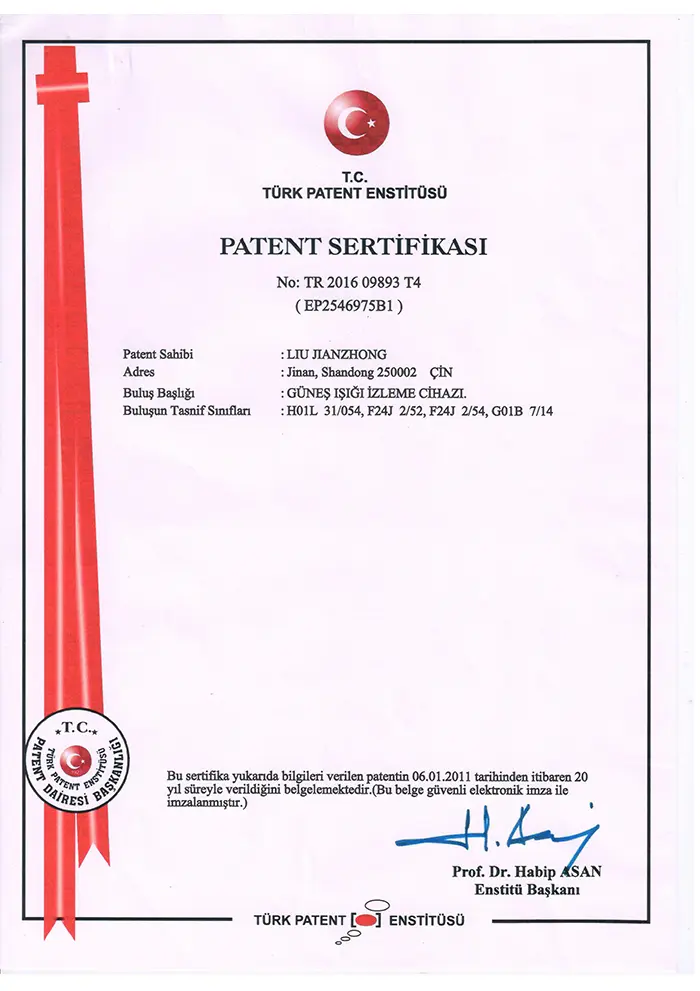
Shandong Zhaori New Energy Tech. Co., Ltd. is a high-tech and new energy company based on independent intellectual property rights. Founded in June 2012, we have established 10 specialized departments including R&D, Technical, Engineering, and Quality Assurance. Our team of 60+ professional technology experts has focused on photovoltaic power stations and solar tracking technology for over a decade.
Our factory covers an area of 50,000 square meters, equipped with CNC machine tools, laser cutting machines, and plasma machines. With 300+ production workers, we achieve a monthly output of 500MW. All products undergo rigorous screening, anti-rust treatment, and inspection in accordance with quality management system certifications.
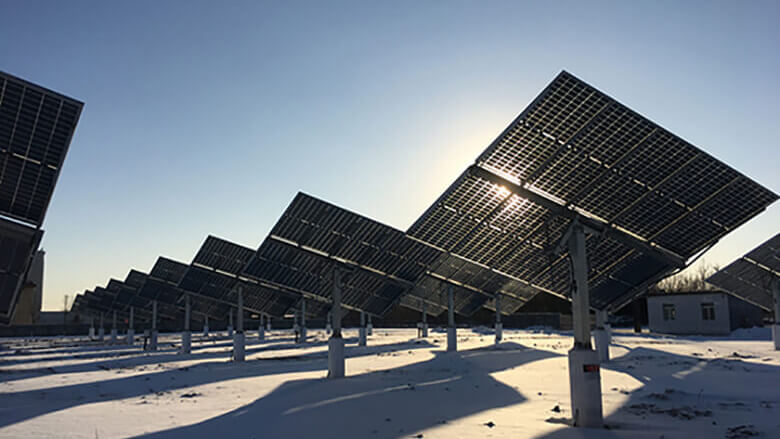
The industry is moving towards Self-Learning Trackers. Our latest ZRD series incorporates AI algorithms that adjust to diffuse light conditions, cloud cover, and backtracking requirements on uneven terrain. This "Smart-Stow" feature protects 1P and 2P arrays during extreme weather events, reducing insurance premiums for project owners.
 Zhaori