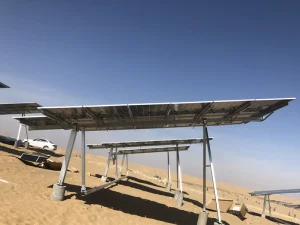
The global energy sector is focused on reducing the Levelized Cost of Energy (LCOE). Solar auto-tracking systems are no longer a luxury but a strategic necessity. By optimizing the angle of incidence, our systems increase yield by up to 35% compared to static installations, significantly accelerating ROI for utility-scale projects.
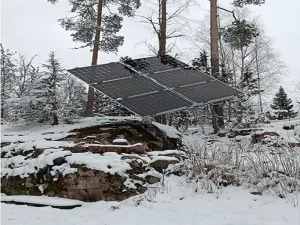
With international commitments to Net Zero, the demand for high-efficiency PV infrastructure is surging. From the deserts of MENA to the snowy plains of Northern Europe, our tracking solutions provide the stability and performance required to meet aggressive renewable energy targets.
Modern solar tracking is evolving into an AI-driven ecosystem. Semantic search intent analysis shows a growing demand for "smart tracking algorithms" that account for diffuse light conditions, backtracking to prevent row shadowing, and automated stowage during extreme weather events.
Founded in June 2012, Shandong Zhaori New Energy Tech. Co., Ltd. stands as a titan in the high-tech renewable sector. Our foundation is built upon independent intellectual property rights and a relentless pursuit of engineering excellence.
With over 60 professional technology talents and 10 dedicated departments—including R&D, Quality Assurance, and Engineering—we possess over a decade of concentrated experience in photovoltaic power stations and solar tracking technology.
"Simpler, More Reliable, More Effective" – Our Core Product Philosophy.
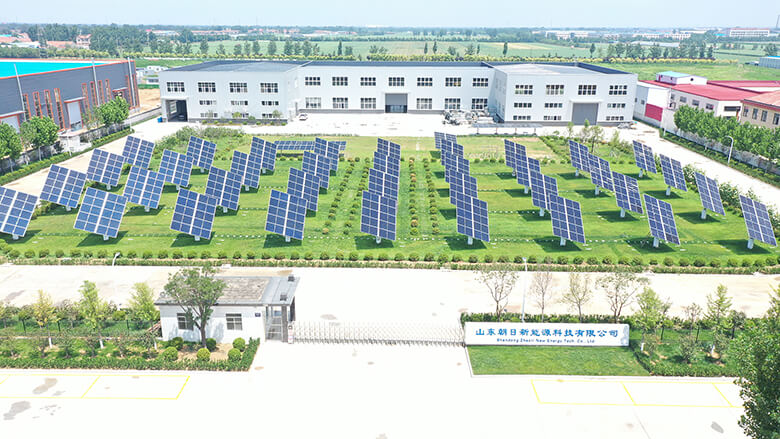
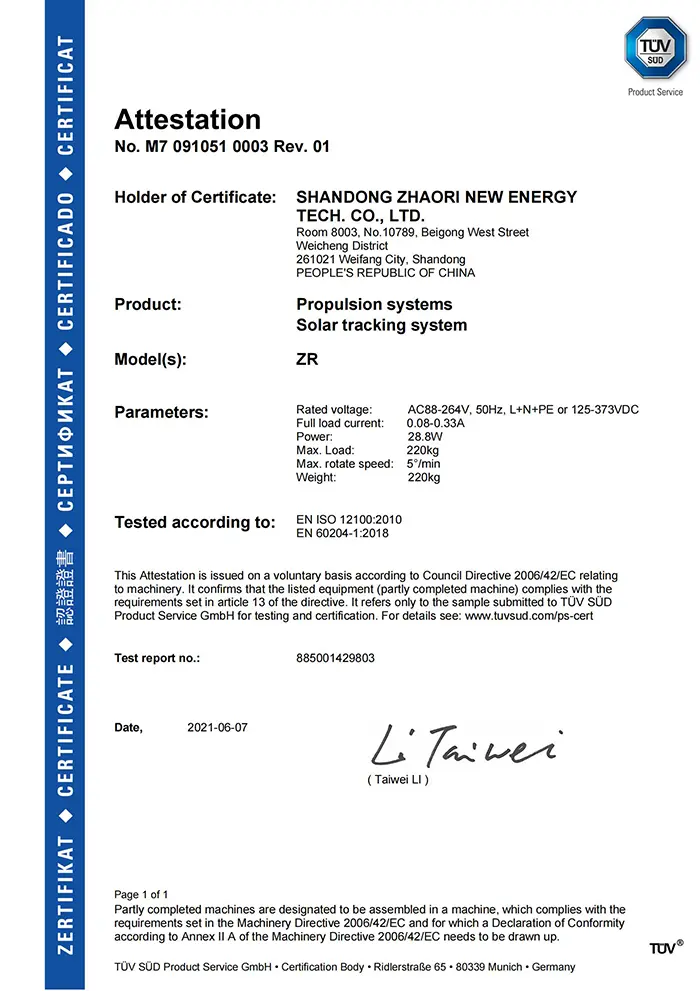
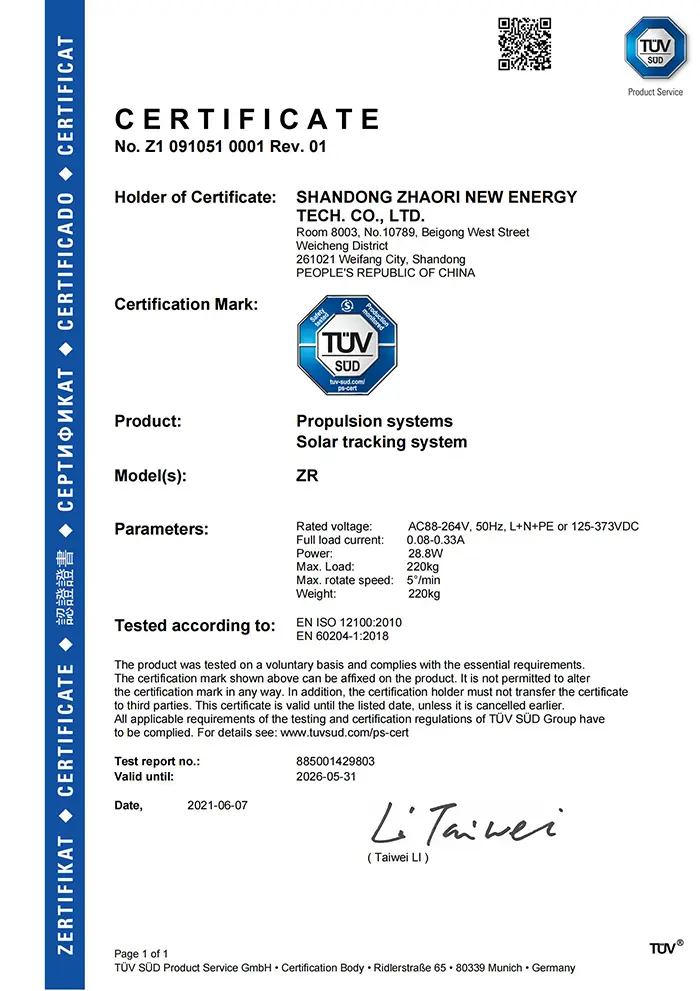
Our factory utilizes CNC machine tools, laser cutting, and automatic welding robots to ensure micron-level precision. Every tracker undergoes strict anti-rust treatment and quality control levels compliant with TUV, CE, and ISO standards.
The ZRD-10 and ZRD-08 systems represent the pinnacle of PV efficiency. By tracking both the azimuth and elevation angles, these systems keep the solar modules perpendicular to the sun's rays throughout the entire day, capturing maximal irradiance even in early morning and late evening.
The ZRT tilted single axis tracking system (10°– 30° tilted) provides a balanced solution between cost and performance, typically increasing power generation by 15% – 25%. Our 2P Flat Single Axis trackers are optimized for bifacial modules, capturing reflected light on the rear side for additional gain.
Navigating the legal and environmental requirements of different regions is a key component of our service. We offer tailored solutions that meet the structural codes of the USA, Canada, Australia, Europe, Japan, and South Africa.
Our systems are tested for extreme wind loads, heavy snow accumulation (as seen in our "Solar tracker after snow" projects), and corrosive coastal environments. We provide professional O&M (Operation and Maintenance) services to ensure long-term reliability.
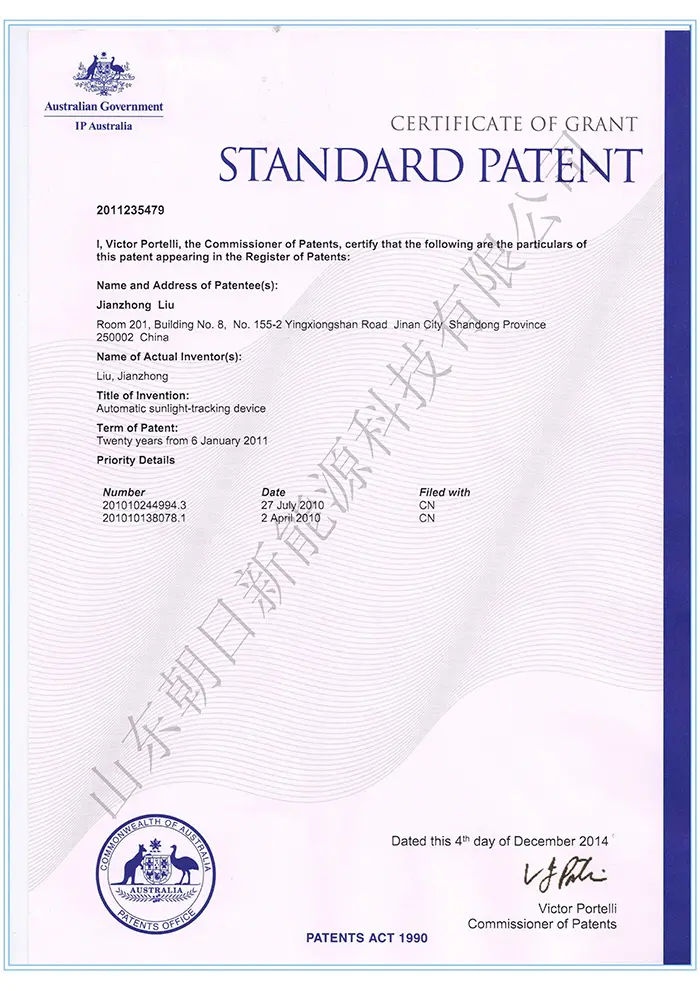
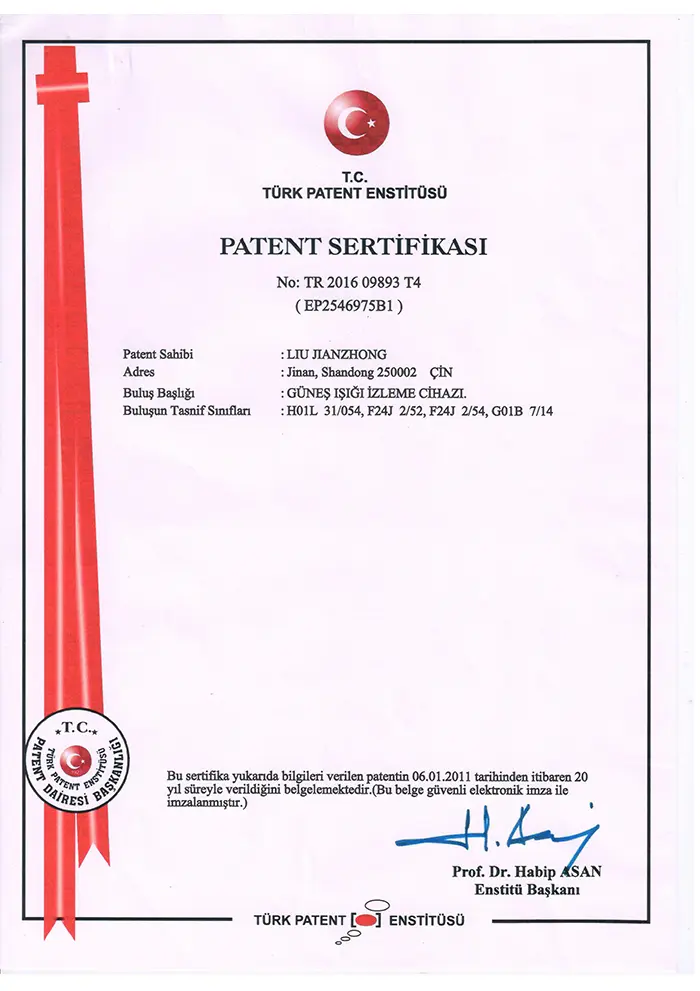
Holding patents in the Europe Patent Office, USA, Brazil, India, and more, we ensure that your investment is protected by legal frameworks and international quality benchmarks (TUV, CE, ISO).
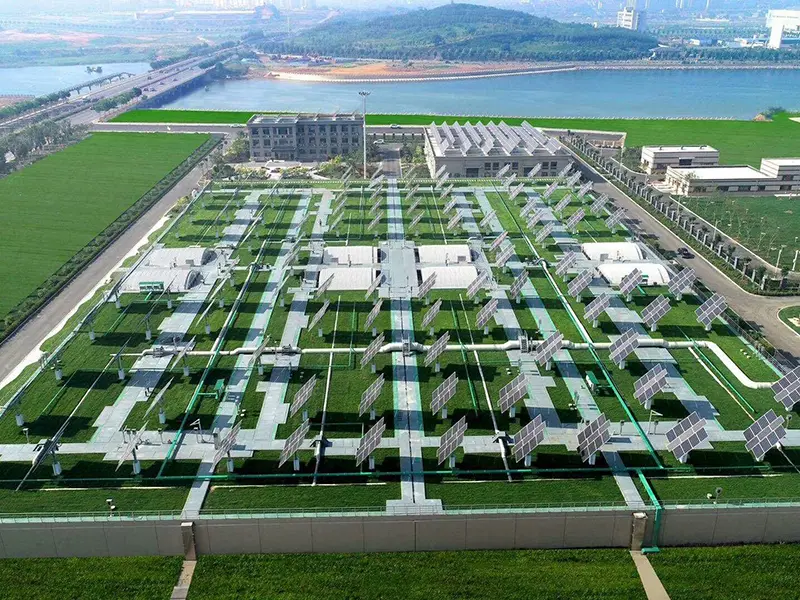
40MW and 360MW installations in desert environments utilize our robust tracking to combat heat and dust while maximizing energy harvest in high-irradiance zones.
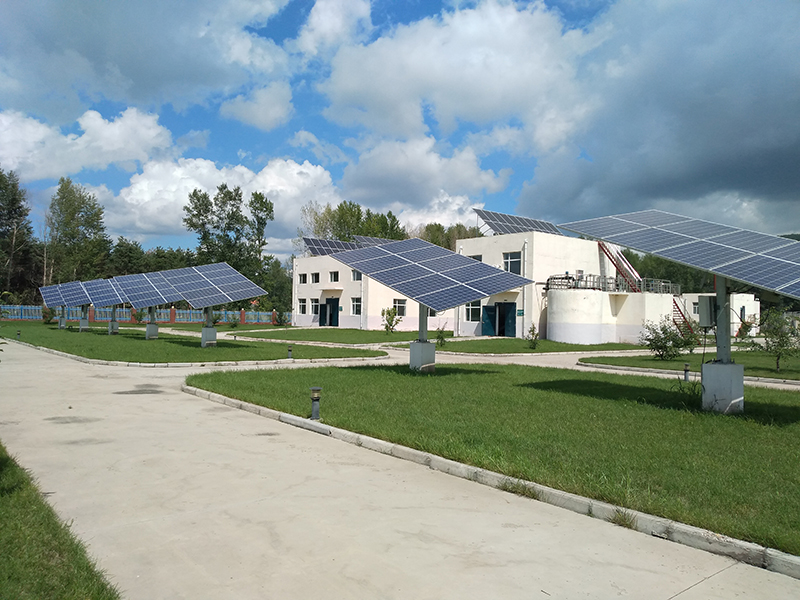
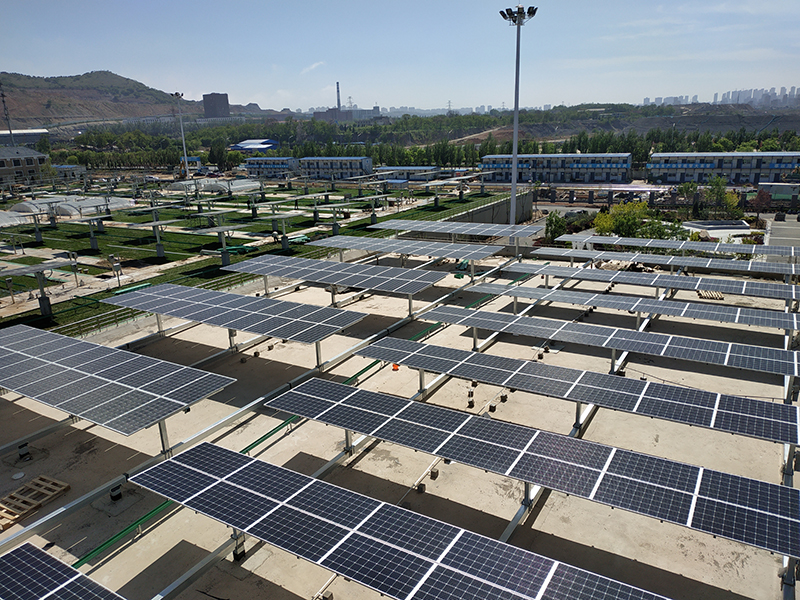
Factory roof projects and green belt installations provide localized power for industries, significantly cutting operational costs and carbon footprints.
Small-scale tracking systems allow residential users to achieve energy independence with fewer panels, maximizing the utility of limited roof or yard space.
Q: What is the main benefit of a Dual-Axis Tracker over a Single-Axis one?
A: A dual-axis tracker follows the sun's path across both axes, maintaining a perfect 90-degree angle. This can result in a 35-40% energy boost compared to fixed systems, whereas single-axis systems typically offer 15-25%.
Q: How do your systems handle extreme wind or snow?
A: Our systems include automated sensors that move the panels to a "stow position" during high winds to minimize drag, or a steep angle during snow to prevent accumulation and structural stress.
Q: Is the maintenance cost higher for tracking systems?
A: While there are more moving parts than static brackets, our "Simpler and Reliable" design philosophy minimizes failure points. The increased energy revenue far outweighs the marginal increase in maintenance costs.
Q: Can these trackers be used with Bifacial modules?
A: Yes! Our 2P flat single-axis systems are specifically designed with high clearance and optimized spacing to maximize the "albedo effect" for bifacial panels.
The next decade of solar energy will be defined by Intelligent Yield Optimization. Shandong Zhaori is currently researching self-learning algorithms that use historical weather data and real-time cloud tracking to preemptively adjust panel angles. Our roadmap includes further integration of IoT sensors for predictive maintenance, ensuring that our clients' solar investments are future-proofed against a changing climate and evolving grid requirements.

 Zhaori