In the rapidly maturing global solar market, the transition from fixed-tilt structures to intelligent tracking systems represents the single most significant lever for reducing the Levelized Cost of Energy (LCOE). Single Axis Solar Trackers (SAST) have emerged as the industry standard for utility-scale projects due to their perfect balance of mechanical simplicity, cost-effectiveness, and significant energy gain (typically 15% to 30% over fixed systems).
As an industry leader, Shandong Zhaori New Energy Tech. Co., Ltd. is at the forefront of this technological shift. By integrating AI-driven backtracking algorithms and robust structural engineering, we provide tracking solutions that don't just follow the sun—they optimize energy capture based on real-time atmospheric conditions and terrain topography.
Founded in 2012, with over 10 years of specialized focus on PV station optimization and tracking precision.
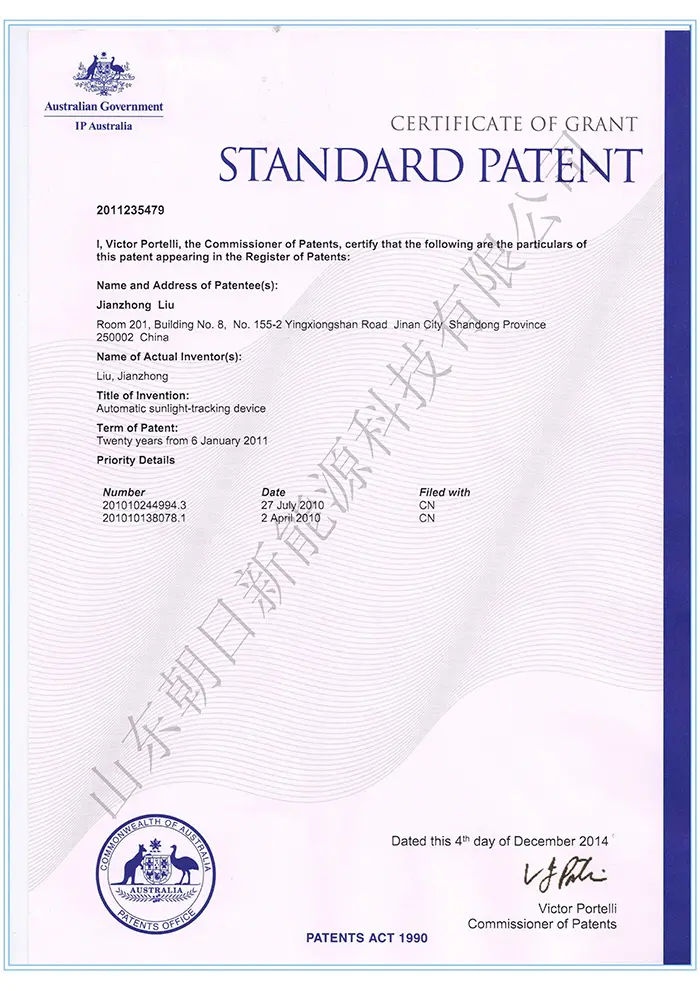
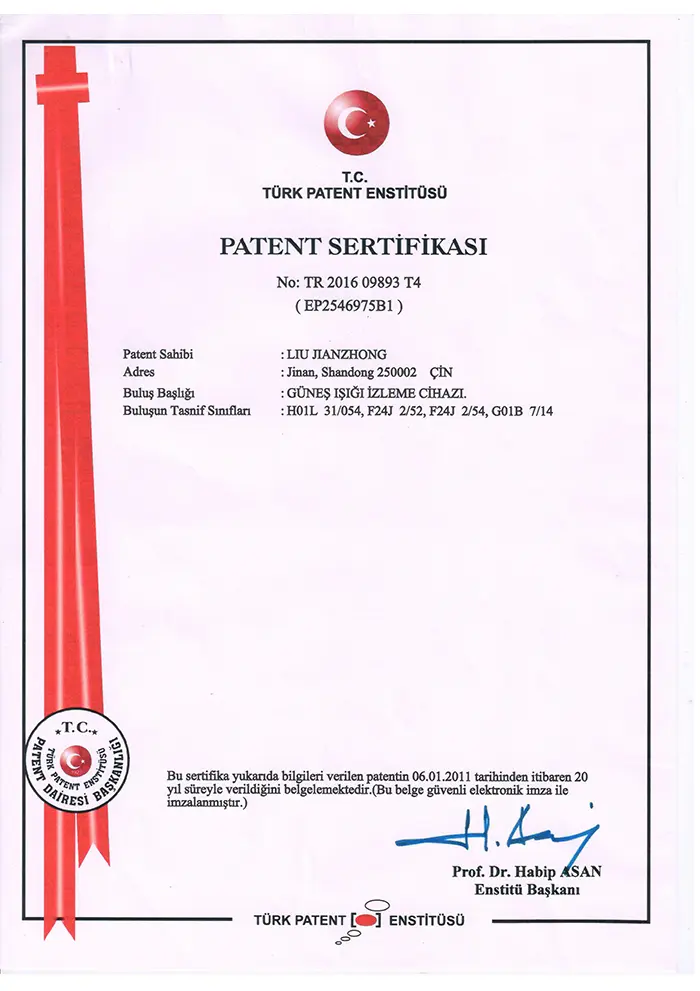
Global patent portfolio including EPO, USA, Canada, Australia, and 8 Chinese National Invention Patents.
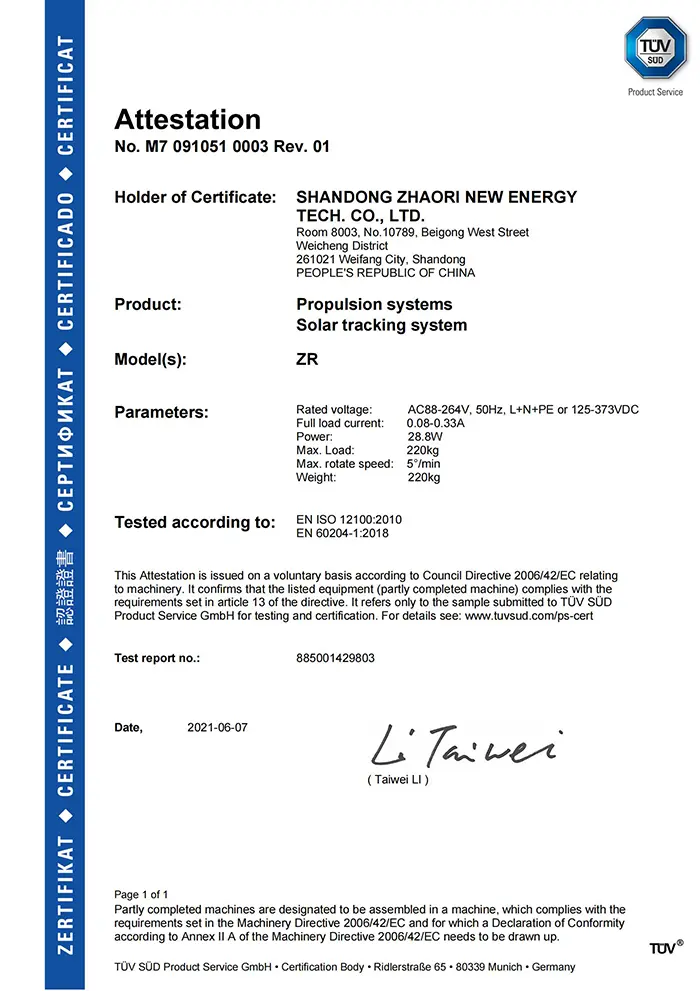
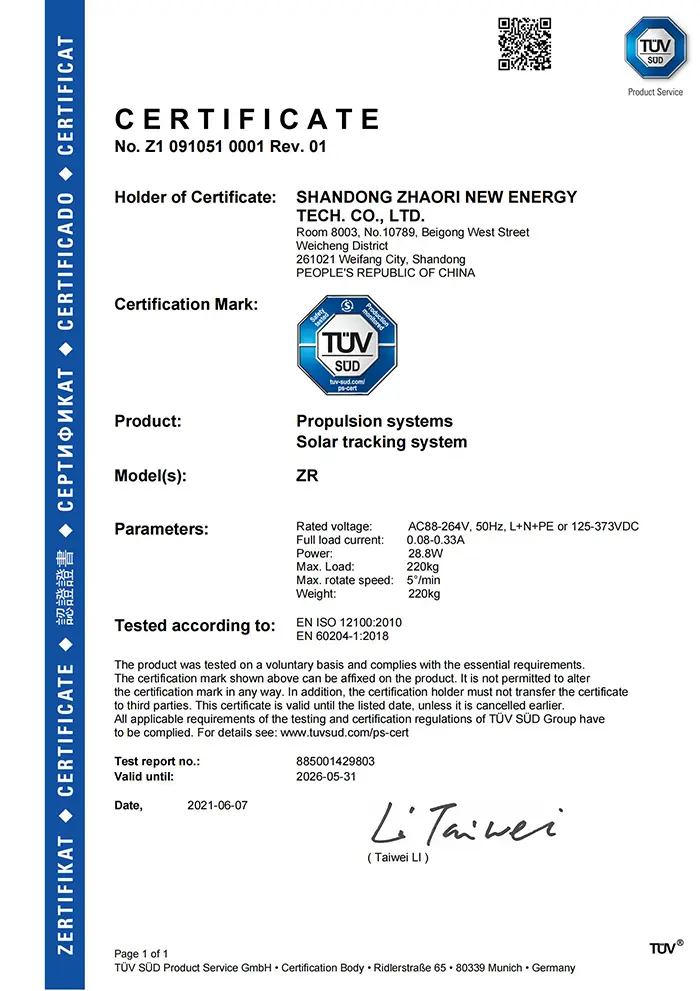
TUV, CE, and ISO certified production lines with 500MW monthly capacity to ensure on-time project delivery.
Modern single-axis trackers use "Backtracking" to prevent rows from casting shadows on one another during early morning and late afternoon. Our latest systems integrate AI that learns from diffuse light sensors, adjusting the angle during cloudy days to maximize irradiance capture from the entire sky, rather than just pointing at the hidden sun.
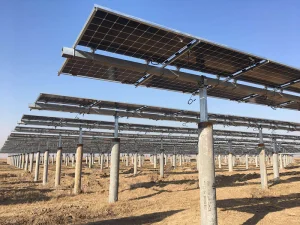
The rise of bifacial modules has revolutionized tracker design. Our 2P (two modules in portrait) and 1P (one module in portrait) flat single-axis trackers are optimized to minimize structural shading on the rear side of the panels, unlocking an additional 5-10% gain from ground reflection (albedo).
One of the traditional barriers to trackers was uneven terrain. Our ZRP and ZRT series feature a decentralized drive architecture, allowing for North-South slope tolerances of up to 15%, significantly reducing the need for costly land grading and environmental disruption.
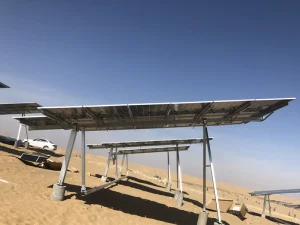
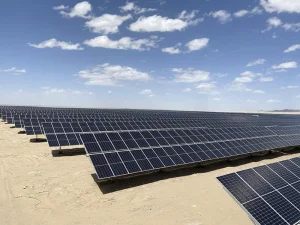
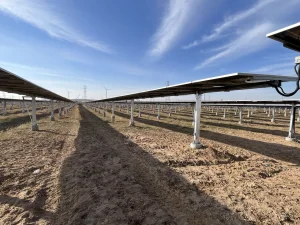
High-torque actuators and sand-proof sealing for projects in the Middle East and Gobi Desert. Proven reliability in 360MW desert installations.
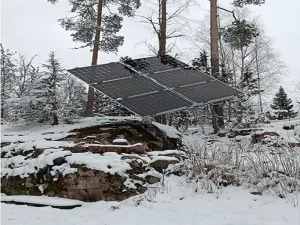
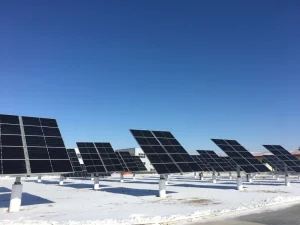
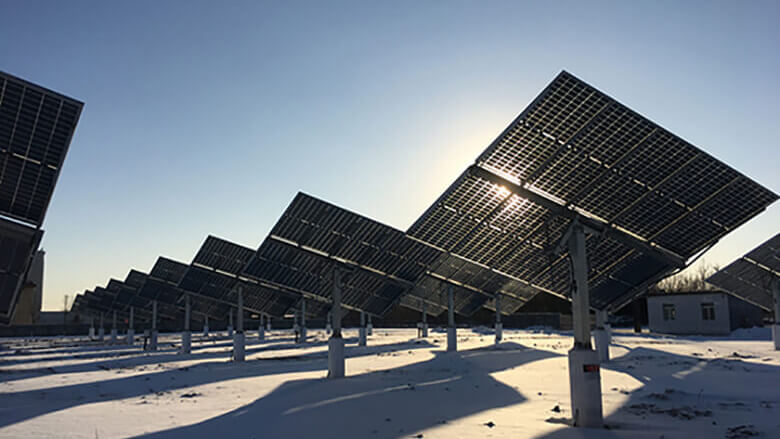
Automated "Snow Mode" tilts panels to 60 degrees during heavy snowfall to prevent accumulation, as demonstrated in our North China projects.
Dynamic aeroelastic analysis and "Stow Mode" activation within seconds of wind speed alerts ensure structural integrity during typhoons.
Operating out of a 50,000 square meter facility in Shandong, Zhaori New Energy leverages the world's most robust industrial ecosystem. Our vertical integration—from raw material screening to robotic welding and plasma cutting—allows us to offer:
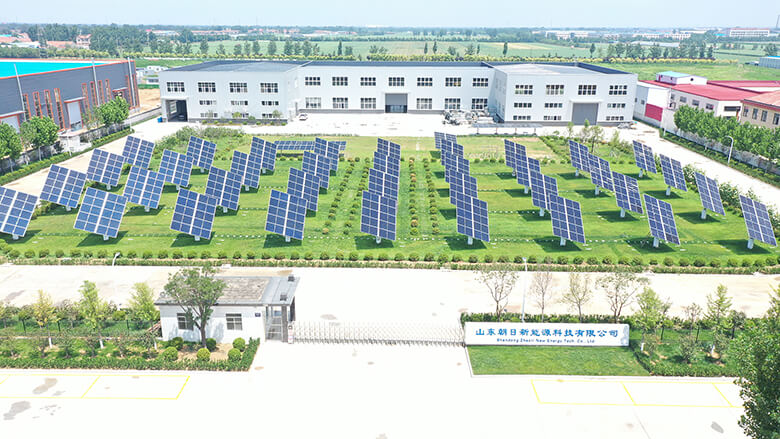
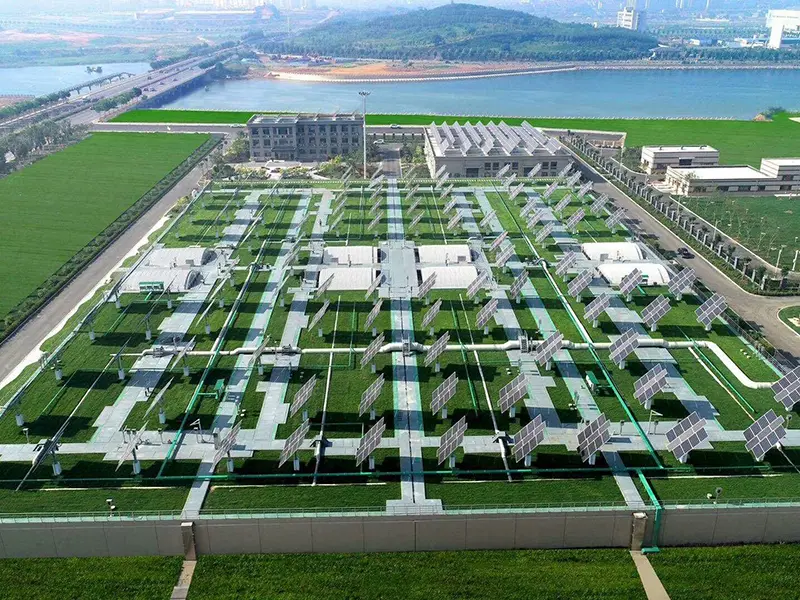
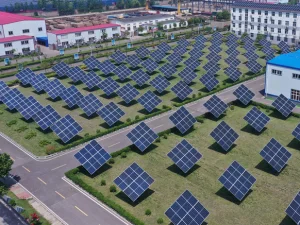
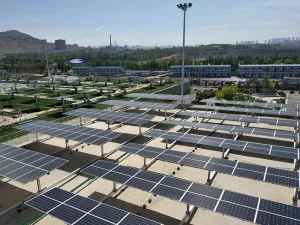
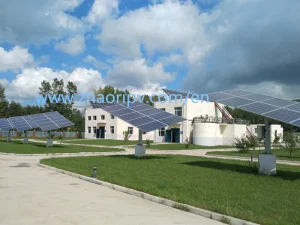
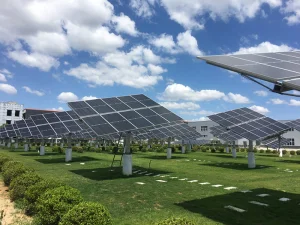
Optimized for factory self-consumption, increasing ROI by 2.4 years compared to fixed systems.
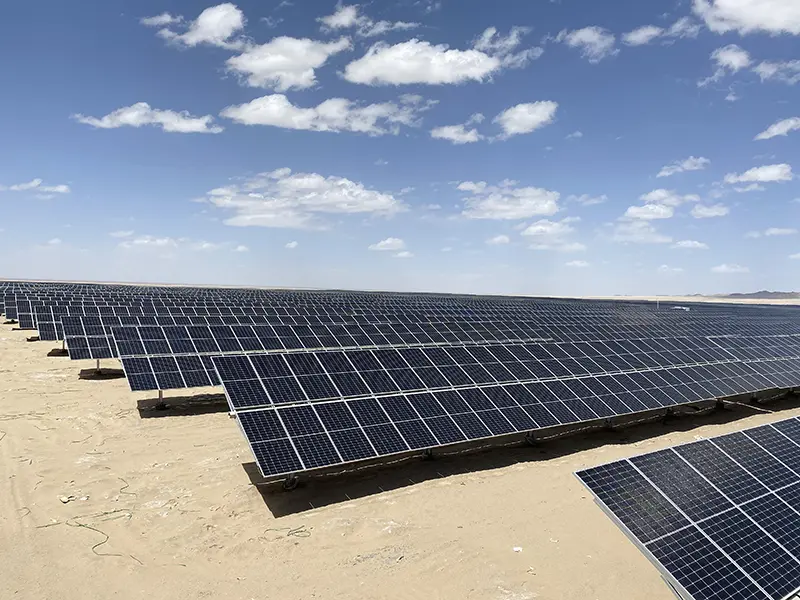
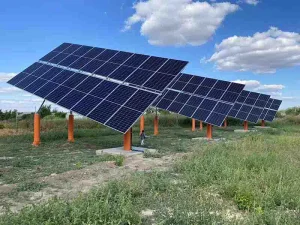
Utilizing high-inclination modules to maximize capture in low-latitude arid regions.
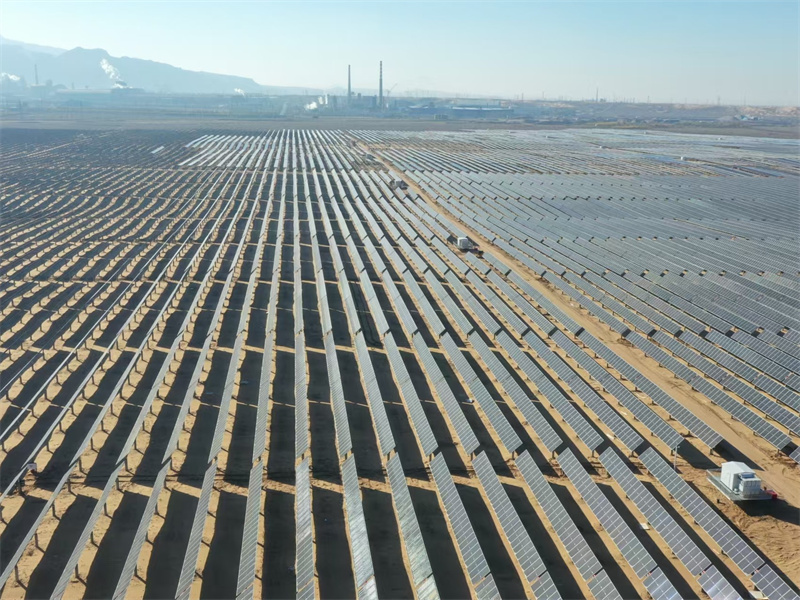
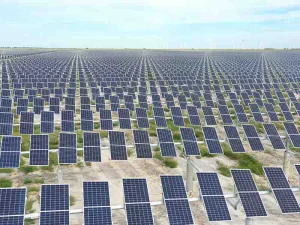
Large-scale deployment demonstrating the reliability of our centralized control systems.
While the initial CapEx is 10-15% higher than fixed brackets, the 20-30% increase in energy production usually results in a 20% higher Internal Rate of Return (IRR) and a payback period shortened by 12-18 months.
Our systems include an integrated anemometer and a "Defense Mode" that automatically levels the modules to a horizontal position (0°) when wind speeds exceed 18m/s, minimizing the wind profile.
Yes, Zhaori New Energy provides comprehensive engineering documentation, remote technical supervision, and on-site commissioning support for global utility-scale projects.
Absolutely. Our 1P and 2P flat trackers are specifically designed with high-clearance and minimal rear-side obstruction to maximize the bifacial gain from ground albedo.
 Zhaori