Choosing the best PV Tracking System from China requires more than comparing prices or motor specifications. A reliable choice begins with the project’s real conditions, including latitude, terrain, wind exposure, soil strength, module format, and maintenance access. A tracker that performs well on a flat desert site may struggle on uneven farmland. Site details matter.
Chinese manufacturers offer several practical options, such as single-axis trackers, multi-row systems, and independently controlled designs. Single-axis models often provide a strong balance between energy gain, structural simplicity, and operating cost. Independent row control can improve flexibility on irregular land, although it may increase electronics, software, and maintenance requirements. More features are not always better.
Field experience shows that mechanical design deserves close attention. Inspectors should examine bearing protection, drive-unit sealing, galvanized steel quality, cable routing, and emergency stow performance. Dust around gearboxes and standing water near foundations can reveal weaknesses after only one season. Small details become expensive problems.
Technical documentation should include wind-load calculations, torque limits, installation tolerances, control logic, and failure-response procedures. Factory testing, sample inspections, and traceable component records can strengthen confidence before shipment. Certifications are useful, but they should support practical evidence rather than replace it. Ask how the system performs under local weather, not only in laboratory conditions.
The “best” solution is therefore site-specific. It should combine dependable tracking accuracy, manageable maintenance, clear warranty terms, and responsive technical support. Some project assumptions may prove wrong after geotechnical surveys or pilot installation. A careful buyer leaves room for correction. This article examines how to compare Chinese PV Tracking System suppliers, technologies, and long-term value with a realistic engineering perspective.
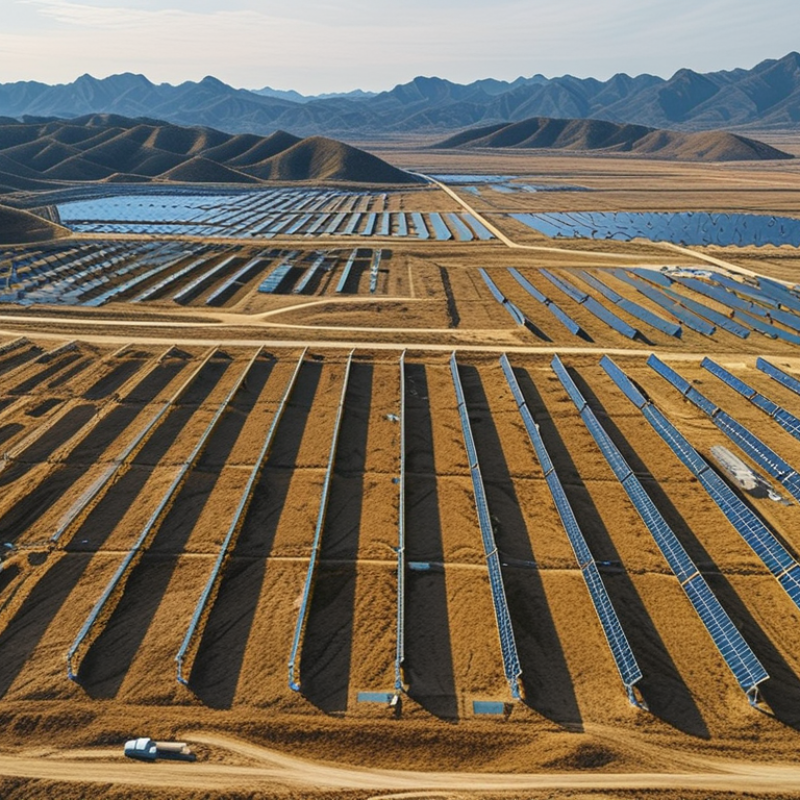
PV tracking systems from China generally fall into three categories: fixed-tilt, single-axis, and dual-axis designs. Fixed-tilt structures do not move, so they use fewer motors and require less maintenance. Single-axis trackers rotate panels from east to west, following the sun’s daily path. They are widely used in utility-scale projects because they balance energy gain, cost, and mechanical complexity. Dual-axis trackers also adjust tilt, capturing more sunlight during seasonal changes, but their additional drives and sensors increase maintenance demands.
The IEA PVPS Trends 2024 report estimated that global photovoltaic additions exceeded 400 GW in 2023. IRENA’s Renewable Capacity Statistics 2024 recorded China’s solar additions at about 217 GW that year. These figures explain the strong demand for scalable tracking equipment. In field operation, a single-axis system may raise annual energy production by roughly 15% to 25% compared with fixed tilt, depending on latitude, weather, row spacing, and terrain. The gain is not automatic. Dust, wind stow settings, uneven foundations, and faulty position sensors can reduce it sharply.
A practical selection begins with the site, not the catalogue. Flat, dry land often suits single-axis tracking. Complex slopes may favor fixed structures. Dual-axis tracking can perform well where direct sunlight is strong, yet its extra moving parts deserve careful inspection. This is where my judgment remains cautious. Higher yield does not always mean better returns. O&M records, wind-load testing, corrosion protection, and spare-part availability should be checked against project conditions and independent engineering reports.
What Is the Best Type of PV Tracking System from China?
Single-axis and dual-axis trackers serve different project realities. Single-axis systems rotate panels from east to west during daylight. Industry simulations commonly show 15–25% more annual energy than fixed-tilt arrays. NREL’s 2024 Annual Technology Baseline uses single-axis tracking as a major utility-scale reference case. This reflects practical economics, not fashion. In China, large flat sites and strong solar resources often support this design.
Dual-axis trackers follow both the sun’s daily path and seasonal height. Their energy gain can reach 25–40% over fixed systems in high-direct-normal-irradiance locations. However, this figure varies sharply with latitude, weather, and row spacing. IEA PVPS Task 13 reports that bifacial systems with tracking can gain roughly 5–15% from rear-side irradiation. More movement does not mean better returns. Dual-axis equipment needs additional drives, sensors, foundations, and maintenance access.
Wind is the uncomfortable detail. A tracker may produce more electricity but face higher structural loads. I would not select dual-axis equipment for every Chinese project. On sloped land, uneven terrain can erase its theoretical advantage. Dust also affects sensors and moving joints. A bankable comparison should use 20-year energy models, local wind data, cleaning costs, downtime assumptions, and replacement budgets. Fraunhofer ISE’s Photovoltaics Report 2024 supports this caution: system design and site conditions strongly influence real-world yield. The spreadsheet is never the whole field.
Choosing the best PV tracking system from China starts with the project, not the catalogue. A flat desert site may suit a single-axis tracker. Uneven terrain may require flexible foundations and wider adjustment ranges. Study wind, snow, soil, and drainage conditions before comparing prices.
Mechanical strength is essential. Inspect torque tubes, bearings, drive units, and corrosion protection. Ask for test records, load calculations, and installation instructions. The control system should respond to weather data, protect panels during high winds, and support remote fault alerts. Compatibility with bifacial modules also deserves attention, because poor row spacing can reduce expected energy gains.
Supply reliability matters too. Check production capacity, spare-part storage, technical training, and response times. Request clear warranty terms and measurable performance conditions. Independent testing and recognized safety certifications add useful evidence, but paperwork cannot replace site validation. During field assessments, I would inspect foundation samples and observe a trial installation. Small alignment errors often become expensive later. Do not ignore local service capability.
A lower purchase price can hide higher maintenance costs. This is where comparisons become difficult. Chinese manufacturers may offer strong customization, but custom designs need careful engineering review. I would compare lifecycle energy yield, downtime risk, logistics, and maintenance access—not only the initial quotation. Even experienced teams can misjudge terrain or wind behavior. A pilot section can reveal problems before full construction.
| Evaluation Dimension | Fixed-Tilt PV System | Horizontal Single-Axis Tracking System | Vertical Single-Axis Tracking System | Dual-Axis Tracking System | Key Selection Guidance for China Projects |
|---|---|---|---|---|---|
| Primary Movement | No daily movement; modules remain at a fixed tilt angle. | Rotates mainly from east to west around a north–south axis. | Rotates around a vertical axis, generally following the sun from east to west. | Adjusts both azimuth and tilt to follow the sun in two directions. | Single-axis tracking is usually the most balanced option for large, open utility-scale sites. |
| Typical Annual Energy Gain Compared with Fixed Tilt | Baseline: 0% tracking gain. | Approximately 15%–30%, depending on latitude, weather, row spacing, backtracking strategy, and system design. | Approximately 10%–25%; performance depends strongly on the project’s latitude and land layout. | Approximately 25%–40% in suitable locations, although the additional gain varies significantly by climate and design. | Use a site-specific energy simulation rather than relying only on general percentage ranges. |
| Best Climatic Conditions | Works in all climates, including locations with difficult terrain or high wind exposure. | Most effective in regions with strong direct sunlight and relatively flat land. | Can be useful where morning and afternoon solar production is especially valuable. | Most beneficial where direct solar irradiance is high throughout the year and maximum yield is the priority. | For many high-irradiance areas in western and northern China, horizontal single-axis tracking is a practical starting point. |
| Land and Row-Spacing Requirement | Usually offers flexible row spacing and high layout adaptability. | Requires additional spacing to reduce inter-row shading and accommodate tracker movement; backtracking can improve land use. | Land requirements vary according to the rotation range and module arrangement. | Generally needs more spacing and careful layout control because both axes move. | Compare the energy gain per hectare, not only the energy gain per installed kilowatt. |
| Terrain Compatibility | Suitable for flat, sloped, irregular, and relatively complex terrain with appropriate civil design. | Best for flat or gently sloping terrain; excessive slope can increase grading and structural complexity. | Suitable for selected sites, but terrain and foundation alignment must be carefully evaluated. | Generally requires accurately aligned foundations and comparatively uniform terrain. | In mountainous or irregular areas, fixed tilt may provide better construction certainty and lower civil-work risk. |
| Wind and Extreme-Weather Response | Has fewer moving parts, but fixed structures still require wind and snow-load verification. | Requires a stow strategy, wind sensors, structural calculations, and reliable emergency positioning. | Requires protection against wind-induced loads and actuator stress during stow events. | More moving components create greater exposure to wind, snow, control, and mechanical risks. | For typhoon-prone or high-wind coastal regions, review stow speed, emergency power, structural testing, and local design loads. |
| Mechanical Complexity | Low; typically uses fixed steel structures and standard foundations. | Moderate; includes drive units, torque tubes, bearings, controllers, sensors, and communication components. | Moderate to high, depending on the drive configuration and structural arrangement. | High; includes two-axis motion, additional actuators, control logic, and more maintenance points. | For most large Chinese PV plants, single-axis systems offer a more mature balance between yield and complexity than dual-axis systems. |
| Operation and Maintenance Requirements | Lowest routine maintenance burden; inspections focus mainly on fasteners, corrosion, foundations, and module condition. | Requires periodic inspection of motors, gearboxes, bearings, controllers, communication networks, and torque-tube alignment. | Requires routine checks of vertical-axis drives, structural joints, controllers, and weather-related wear. | Highest maintenance demand because both drive axes and control systems must remain calibrated. | Confirm spare-parts availability, remote diagnostics, maintenance procedures, and service response time in the project region. |
| Electrical and Control Requirements | Simple; no tracker control network or movement power is required. | Needs tracker controllers, position algorithms, communication wiring or wireless links, and auxiliary power. | Needs control systems capable of managing azimuth movement and safe operating limits. | Needs more advanced positioning, calibration, communications, and fault-management functions. | Evaluate control compatibility with the plant SCADA system and confirm operation during communication or grid outages. |
| Capital Cost Profile | Lowest structural and control-system cost in most projects. | Higher than fixed tilt because of drives, controls, steel, installation, and commissioning requirements. | Usually higher than fixed tilt, with cost depending on structural design and actuator selection. | Typically the highest initial cost because of additional actuators, structure, controls, and installation work. | Choose tracking only when the expected lifetime energy revenue and land-value benefits justify the added cost. |
| Construction and Commissioning | Relatively straightforward and familiar to most EPC teams. | Requires accurate pile positioning, torque-tube alignment, drive installation, software setup, and functional testing. | Requires careful axis alignment and movement-range commissioning. | Requires the most extensive mechanical calibration, control testing, and safety verification. | Ask suppliers for installation tolerances, commissioning procedures, quality records, and on-site technical support. |
| Typical Project Scale | Residential, commercial and industrial rooftops, distributed generation, and utility-scale projects. | Medium- to large-scale ground-mounted PV plants, especially utility-scale projects. | Selected commercial, industrial, and ground-mounted applications where its geometry fits the site. | Smaller high-value installations, research facilities, and applications where maximum solar capture is more important than simplicity. | For a large ground-mounted project, compare single-axis tracking with fixed tilt through a bankable yield and financial model. |
| Suitability for Chinese Supply Chains | Broad availability of steel structures, fasteners, foundations, and installation resources. | Strong supply-chain suitability because key components and engineering capabilities are widely available in China. | Available, but project-specific engineering and service capability should be verified carefully. | Available for specialized applications; supplier qualification and long-term service capability are especially important. | Assess manufacturing capacity, quality-control systems, export experience, documentation, and local or overseas support. |
| Recommended Choice | Best when simplicity, low maintenance, difficult terrain, or high wind exposure is the primary concern. | Best overall option for many large, flat, high-irradiance utility-scale projects when the energy gain supports the extra cost. | Best only when site geometry, solar profile, and project economics specifically favor vertical-axis movement. | Best when maximum solar capture is required and the project can accept higher cost, maintenance, and structural complexity. | For many China-sourced utility-scale systems, begin with horizontal single-axis tracking, then validate the choice using site-specific technical and financial analysis. |
For most utility-scale projects, a single-axis horizontal tracker from China offers the strongest balance of output, reliability, and cost. It follows the sun from east to west and can increase annual energy production compared with fixed structures. The actual gain depends on location, row spacing, terrain, and weather. In dusty regions, poor alignment can erase part of the expected benefit.
Performance begins with mechanical design. Galvanized steel, sealed bearings, and protected drive components help resist rain, dust, and coastal corrosion. A dependable control system should include wind-stow protection, position feedback, and simple manual controls. During site inspections, technicians often check motor noise, foundation movement, cable tension, and uneven row angles. Small deviations matter.
Maintenance access also affects long-term value. Trackers with modular actuators and widely available replacement parts reduce downtime. Remote monitoring can reveal abnormal current, stalled rows, or repeated stow events before physical damage occurs. Yet no tracker is maintenance-free. Lubrication schedules may be overlooked, and sensors can fail after extreme weather. Dual-axis systems may produce more energy in selected locations, but they usually require more moving parts and closer supervision. For many Chinese solar projects, a well-tested single-axis system is the more practical choice, though local wind, snow, soil, and service capability should decide the final design.
Single-axis tracking generally provides the best balance between energy gain, system availability, and maintenance requirements. The figures shown are representative industry benchmark midpoints: annual energy gain and availability are percentages, while maintenance is estimated annual labor hours per MW.
Typical benchmark ranges: single-axis energy gain 15–25% and availability 98.5–99.5%; dual-axis energy gain 25–40% and availability 97.5–99.0%. Actual results depend on climate, terrain, wind loading, drive technology, installation quality, and service practices.
Selecting a tracker depends on the project site, not the country of manufacture. For flat, high-irradiance land, a horizontal single-axis tracker often provides a strong balance. It follows the sun from east to west and improves daily energy capture. However, uneven terrain may require flexible foundations and advanced backtracking. Without them, rows can shade each other during early and late hours.
For steep slopes, limited land, or complex layouts, fixed-tilt structures can be more reliable. They usually need less maintenance and tolerate stronger wind conditions. Dual-axis trackers can capture more sunlight, but their moving parts, control systems, and maintenance demands increase. In snowy regions, automatic stow positions and durable drive components matter. Near coastal areas, corrosion protection deserves close inspection. A lower price can hide higher lifetime costs. That is easy to underestimate.
Tips: Check wind, snow, soil, slope, and temperature records before selecting equipment. Request independent structural calculations and verified load tests. Confirm compatibility with bifacial modules and the project’s cleaning plan. Review spare-part access and remote monitoring capabilities. Ask how the tracker performs during faults and high-wind stow events. A useful design is not always the most advanced one. Site measurements should challenge the first proposal.
: A horizontal single-axis tracker often balances energy output, reliability, and cost. It follows the sun east to west. The best choice still depends on local conditions.
It can increase annual production compared with fixed structures. The actual gain depends on sunlight, row spacing, terrain, and weather. Poor alignment can reduce the expected benefit.
Uneven terrain may cause row shading during morning and evening hours. Flexible foundations and backtracking can help. Steep slopes may favor fixed-tilt structures.
Galvanized steel resists weather exposure. Sealed bearings help limit dust and moisture damage. Protected drive components can reduce corrosion and mechanical wear.
Wind-stow protection helps protect rows during strong winds. Position feedback identifies alignment problems. Simple manual controls remain useful during system faults.
They should check motor noise, foundation movement, cable tension, and row angles. Small alignment changes can affect energy production. Tiny errors matter.
Yes, monitoring can identify abnormal current, stalled rows, and repeated stow events. These warnings may appear before physical damage occurs. Still, sensors can fail after extreme weather.
No. They may capture more energy in selected locations. However, they contain more moving parts and require closer supervision. More output does not always mean better lifetime value.
Review replacement-part access, maintenance labor, monitoring tools, and downtime risks. A lower price can hide higher lifetime costs. That is easy to underestimate.
Review wind, snow, soil, slope, and temperature records. Request independent structural calculations and verified load tests. Check module compatibility, cleaning plans, and high-wind operation.
Choosing the best PV Tracking System from China requires a clear understanding of project goals, site conditions, and long-term operating requirements. Single-axis trackers rotate panels along one primary direction, offering a practical balance between energy gain, structural simplicity, and cost. Dual-axis trackers follow the sun more precisely across two directions, maximizing solar exposure but generally involving higher investment, greater mechanical complexity, and more maintenance. Fixed systems may still be preferable where land, weather, or budget limitations reduce the benefits of tracking.
Important selection factors include local solar resources, terrain, wind and snow conditions, soil quality, module layout, installation capacity, control technology, and after-sales support. A reliable system should use durable components, stable tracking algorithms, effective protection features, and accessible maintenance procedures. For large, relatively flat projects, single-axis tracking is often a strong choice, while dual-axis solutions may suit locations where maximum energy capture is more important than simplicity. Careful evaluation of performance, reliability, lifecycle costs, and site compatibility will help determine the most suitable Chinese tracking solution for each solar project.

Zhaori
